HOLLYWOOD'S RACIAL STEREOTYPES:
WHY THEY DO IT
by Jeremy Slater, guest contributor...[November
15, 2006]
| [HollywoodInvestigator.com]
In the professional screenwriter's arsenal of word-type-thingies, few tools
are as useful as the racial stereotype.
In screenwriting, blank space
is more valuable than, say, the life of an unborn child. This is
because each and every screenplay is a desperate race to finish your story
before the studio executive loses interest and abandons your script in
search of greener intellectual pastures, such as the scriptment for Deal
or No Deal: The Movie.
This means you must make
every paragraph, every line, every cocksucking comma COUNT.
So go
ahead. Try to create nuanced, believable characters with richly-developed backstories
and motivations, all set against a backdrop of intergalactic moonshiners
in a chilling future where parties have been outlawed and only outlaws
party. You can't do it, can you?
Enter
the stereotype. |
Buy the
DVD at Amazon.com.
|
Stereotypes
are invaluable because audiences have been conditioned to expect certain
behaviors from certain types of characters. The black sidekick? A hilarious motormouth. The gay best friend? A mincing, catty
rogue with a heart of gold. The Italian guy? A dirty, dirty
rapist.
The point
is that audiences will happily accept established archetypes in place of
genuine character development, thus freeing up the remaining pages for
more important matters, like that scene where Buck Cracker throws a knife
right at the camera while we go swirling around in bullet time. Holy
shit, that's going to be so great.
Even better
is the fact that packing your script with insulting stereotypes can often
baffle your critics into a sort of stunned, drooling silence as they try
to figure out what message you're trying to convey. There's no way
the writer would have intentionally made his villain a bling-sporting thug
rapper named Shooty McCrack, they'll reason. I must be missing something. What they're missing, of course, is the fact that you don't give a rat's
ass and you just want to get paid. But hey, the polite, nonconfrontational
reviews don't hurt!
Here's
an example from a script we're currently speccing in an attempt to cash
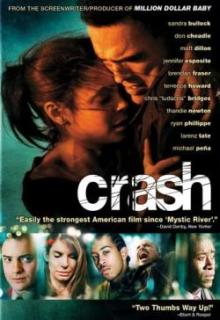
in on the Crash craze of dewy-eyed, racially-charged pablum. It's called We're
All So Different, and it's the touching story of nine stereotypes -- including
a black NBA player, an Asian sushi chef, a Mexican dishwasher, and a heroic
white firefighter -- who are trapped in an elevator for ninety long minutes,
where they're forced to confront their own prejudices and insecurities. And also the NBA player, who tries to mug them all.
Here's
a sample:
INT. ELEVATOR
PADDY O'SHAMROCK weaves
drunkenly across the enclosed space. His face as red as a Blarney Stone
covered in red paint.
PADDY
(vomiting)
Erin go blaaaaaaugh!
The contents of his stomach
(Irish breakfast stuff) splatter across the white shoes of old MRS. WEALTHYWHITE.
She sniffs snootily.
MRS. WEALTHYWHITE
In my day, we used the bodies
of Irish children to stoke the
furnaces of progress. Things
have certainly changed.
HECTOR
Ai-yai-yai, you are right,
seenorita!
MRS. WEALTHYWHITE
Clean my shoes, you.
HECTOR
Oh, si, si.
Hector eagerly wipes
her shoes clean using his own hair. He waits, trembling, for a tip.
Mrs. Wealthywhite sighs and tosses a shiny new nickel on the elevator floor.
In an instant, Hector
is slammed aside by LEVI SCHNOZZSTEIN, who goes scrambling for the coin,
his eyes all ablaze.
LEVI
MONEY! MONEY! OH SWEET
YAHWEH, IT'S MONEY!

Insulting? Perhaps. But remember: you can justify any uncreative stereotype
simply
by wrapping up your script with a trite, simplistic moral about our shared
humanity. See, your viewers will think, that writer wasn't just taking
the lazy way out. He was trying to enrich our lives.
If you
can send the audience reeling out of the theater, drunk on the noble power
of the human spirit, they may not even remember your failings as a writer,
such as the fact that you never got around to naming half of your characters.
For example:
EXT. CITY STREET - DAY
The doors open and the
refugees from the elevator come stumbling out. Blinking in the harsh
light of day. Changed forevermore.
Across the street, a
bloom of fire suddenly erupts from a neighboring building. The firefighter
starts forward...then pauses.
JOHN McAPPLE
Oh...it's just a Korean
dry-cleaning service.
Yet as John watches the
burning Koreans flop and flounder across the street, something changes
deep down in his little white heart. (Note to SOUND GUY: This is
the part where the music goes BA-DUM-BAAAAA.)
John starts forward.
Again.
JOHN McAPPLE
Stand back, folks. I've
got a job to do.
And his new friends all
cheer.
PADDY
Yer a bonny fine lad,
laddie-boy!
MRS. WEATHERWHITE
Three cheers for our men
and women in uniform!
G-DAWG "DUNK" JORDAN
I've decided to go back to
college!
And the sunlight...oh,
it is beautiful.
FADE OUT.
Copyright 2006 by Jeremy Slater.

|